
Which Marketing Strategy Is Better for Your Brand?
Choosing the right marketing strategy is one of the most important decisions a business can make. A strong strategy can increase brand awareness, generate qualified leads, improve customer loyalty, and support long-term business growth. However, with so many options available—such as SEO, social media marketing, paid advertising, content marketing, email marketing, influencer marketing, and offline promotion—it can be difficult to decide which approach is best for your brand.
The reality is that there is no single marketing strategy that works equally well for every business. The best strategy depends on your target audience, industry, budget, business goals, competition, and current stage of growth. Instead of choosing a strategy because it is popular, brands should select marketing channels based on where their customers are and how they make purchasing decisions.
Understand Your Marketing Goals First
Before comparing different strategies, you should clearly define what you want to achieve.
A new business may want to increase brand awareness, while an established company may focus on generating leads or increasing sales. An e-commerce brand may prioritize online conversions, whereas a local service provider may want more phone calls, inquiries, and store visits.
Your marketing goals may include:
- Increasing website traffic
- Generating qualified leads
- Improving online sales
- Building brand awareness
- Entering a new market
- Retaining existing customers
- Promoting a new product or service
Once your goals are clear, it becomes easier to choose the right marketing strategy and measure its performance.
Search Engine Optimization for Long-Term Growth
Search Engine Optimization, commonly known as SEO, focuses on improving a website’s visibility in unpaid search engine results. It involves keyword research, content optimization, technical improvements, internal linking, local SEO, and link building.
SEO is especially useful for businesses whose customers actively search online for products, services, or information.
For example, a dental clinic can optimize its website for searches such as “dentist near me,” while a software company can create helpful content around business problems its product solves.
The biggest advantage of SEO is its long-term value. Once your pages start ranking, they can continue generating traffic and leads without requiring payment for every click. SEO also helps build trust because many users consider organic search results more credible than advertisements.
However, SEO usually requires patience. Rankings may take time to improve, especially in competitive industries. Therefore, SEO is best for brands that want sustainable growth and are prepared to invest consistently in quality content and website optimization.
Paid Advertising for Faster Results
Paid advertising includes platforms such as Google Ads, LinkedIn Ads, Facebook Ads, Instagram Ads, and YouTube Ads. It allows businesses to reach specific audiences based on keywords, interests, job titles, location, behaviour, and other targeting criteria.
Paid advertising is one of the best strategies for brands that want immediate visibility, leads, or sales. Unlike SEO, which takes time, paid campaigns can start driving traffic shortly after launch.
Google Ads can be effective when customers are already searching for a particular product or service. Social media advertising is useful for creating demand, promoting visual products, and reaching users based on their interests. LinkedIn Ads may work better for B2B companies targeting professionals and decision-makers.
The main limitation is that traffic usually stops when the advertising budget stops. Poor targeting, weak landing pages, or ineffective ad copy can also lead to wasted spending. Paid advertising should therefore be regularly monitored and optimized.
Social Media Marketing for Awareness and Engagement
Social media marketing helps brands communicate directly with their audience through platforms such as Instagram, Facebook, LinkedIn, YouTube, and X.
It is particularly effective for businesses that rely on visual content, community engagement, personal branding, or regular customer interaction. Fashion, food, travel, fitness, education, entertainment, and lifestyle brands can benefit greatly from a strong social media presence.
Social media allows businesses to share product updates, customer stories, educational posts, videos, behind-the-scenes content, and promotional offers. It also gives customers an opportunity to interact with the brand through comments, messages, and shares.
However, posting without a clear content strategy may not produce meaningful results. Brands need consistency, creativity, audience understanding, and platform-specific content. Social media success should not be measured only by likes and followers. Website visits, inquiries, leads, and sales are more valuable indicators.
Content Marketing for Building Authority
Content marketing involves creating useful and relevant content that educates, informs, or entertains your audience. It can include blogs, videos, case studies, guides, podcasts, infographics, webinars, and social media posts.
This strategy is suitable for brands that need to educate customers before they make a purchase. It is especially valuable in industries such as technology, finance, healthcare, education, consulting, and professional services.
High-quality content builds authority and trust. It helps potential customers understand their problems, compare solutions, and make informed decisions. Content can also support SEO, email campaigns, social media, and sales conversations.
The best content marketing strategy focuses on customer questions rather than only promoting products. A brand that consistently provides helpful information is more likely to become a trusted choice when the customer is ready to buy.
Email Marketing for Customer Retention
Email marketing is one of the most effective strategies for nurturing leads and maintaining relationships with existing customers. Businesses can use email to share offers, product updates, educational content, event invitations, reminders, and personalized recommendations.
Unlike social media platforms, an email list gives brands more direct control over communication with their audience. Email campaigns can also be segmented based on customer interests, purchase history, location, or stage in the sales journey.
Email marketing works well for e-commerce businesses, service providers, educational platforms, software companies, and subscription-based brands.
Its success depends on the quality of the email list and the relevance of the content. Sending too many promotional messages may lead to unsubscribes, while useful and personalized emails can strengthen customer loyalty.
Influencer Marketing for Trust and Reach
Influencer marketing involves collaborating with creators who already have an engaged audience. It can help brands gain visibility, build credibility, and reach specific customer groups.
This strategy works particularly well for beauty, fashion, food, fitness, technology, travel, and consumer product brands. Micro-influencers with smaller but highly engaged audiences may sometimes deliver better results than celebrities with millions of followers.
The success of influencer marketing depends on choosing creators whose audience, values, and content style match the brand. Businesses should evaluate engagement quality, audience relevance, content authenticity, and campaign goals before starting a collaboration.
Which Strategy Is Best for Your Brand?
The best marketing strategy is usually not a single channel. Most successful brands use a combination of strategies.
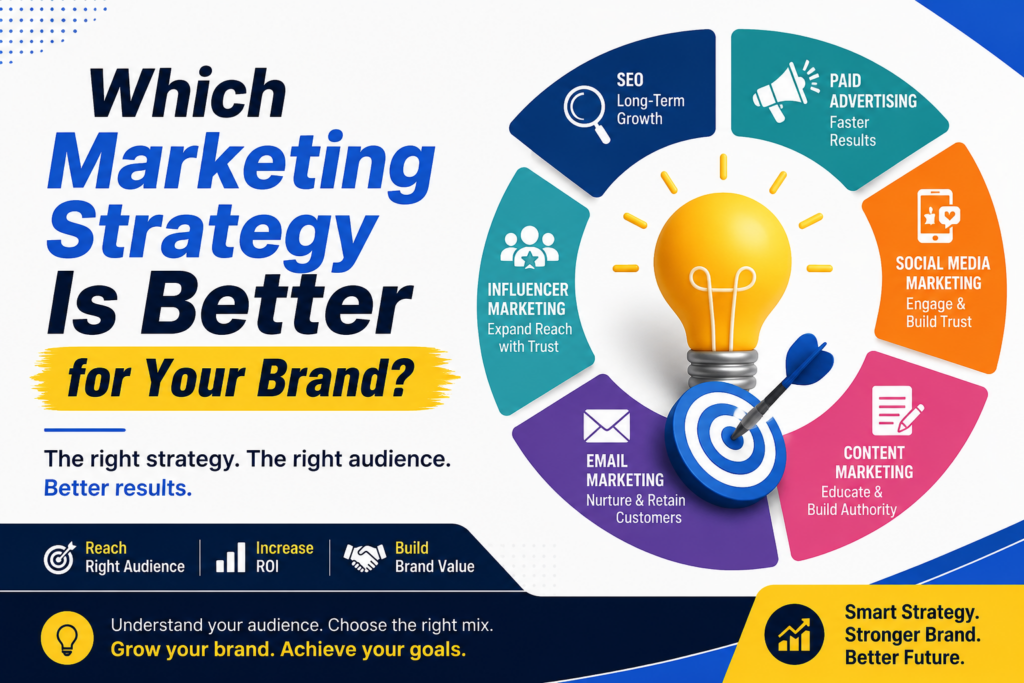
For example, SEO can generate long-term website traffic, paid ads can deliver immediate leads, social media can improve awareness, content marketing can build trust, and email marketing can nurture prospects.
A new brand with a limited budget may begin with content marketing, SEO, and organic social media. A business launching a time-sensitive offer may prioritize paid advertising. A B2B company may combine LinkedIn marketing, email outreach, case studies, and search advertising. An e-commerce brand may focus on social media, influencer partnerships, remarketing, and email automation.
The right combination should be based on customer behaviour and business goals rather than trends.
How to Choose the Right Marketing Mix
Start by identifying your ideal customer and understanding where they spend time online. Review how they search for information, what influences their decisions, and how long they take to make a purchase.
Next, evaluate your available budget, team, content resources, and timeline. Select a few relevant channels instead of trying to use every platform at once.
Set clear performance indicators such as traffic, leads, conversion rate, customer acquisition cost, return on advertising spend, and revenue. Test different approaches, review the results, and invest more in the strategies that produce meaningful business outcomes.
Conclusion
There is no universal answer to which marketing strategy is better for every brand. SEO is valuable for long-term visibility, paid advertising supports faster results, social media improves engagement, content marketing builds authority, email marketing strengthens customer relationships, and influencer marketing expands reach.
The best strategy is the one that connects your brand with the right audience at the right stage of their buying journey. By understanding your goals, testing different channels, and measuring performance, you can create a balanced marketing strategy that supports both immediate results and sustainable growth.